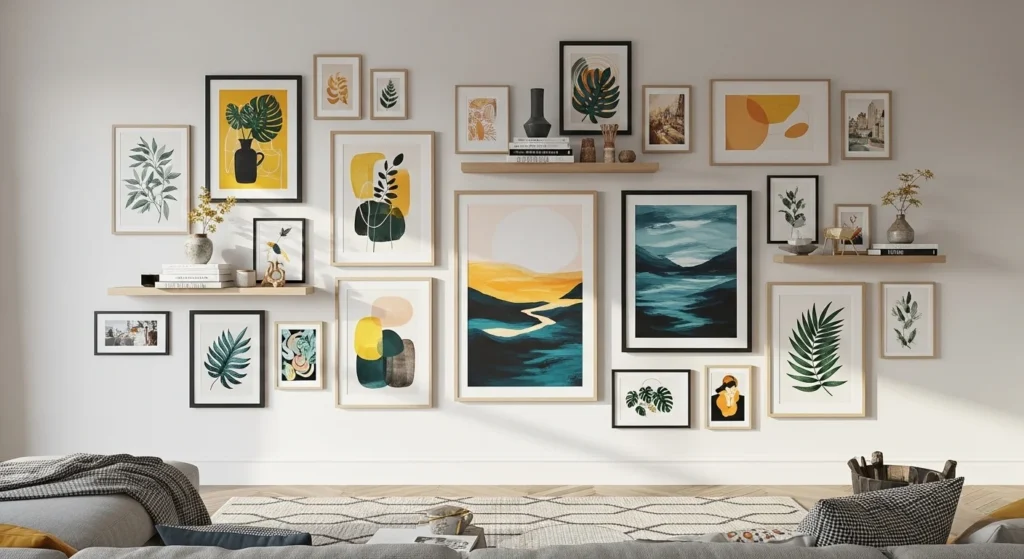
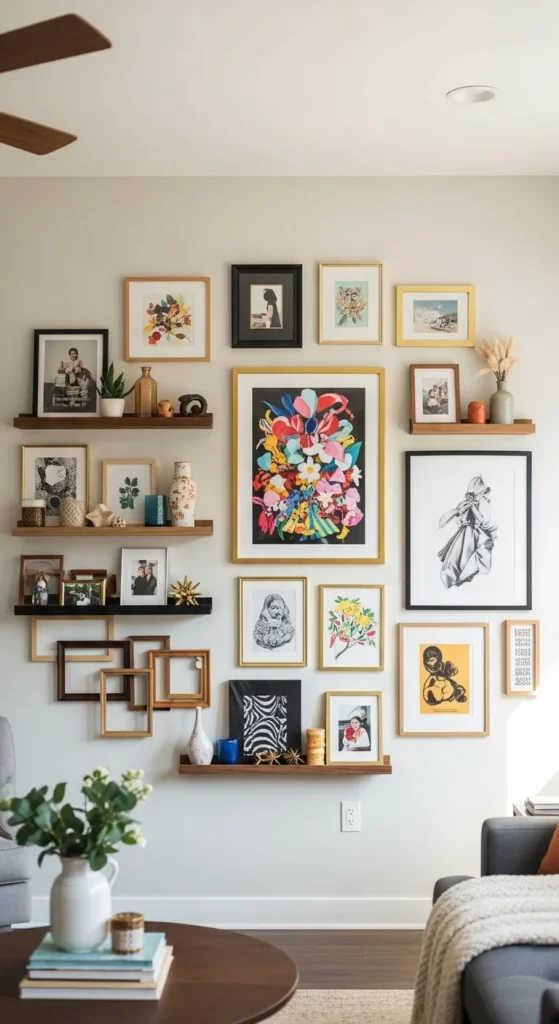
DIY gallery walls elevate spaces with pro-level styling using frames, art, and layouts. Top results stress layout planning, frame variety, and mixing elements for jaw-dropping effects. Creating a gallery wall might seem daunting, but with the right plan, you can transform any blank wall into a visually striking display. Here’s a step-by-step guide to bring professional styling to your own home.
1. Saloon-Style Dense Cluster
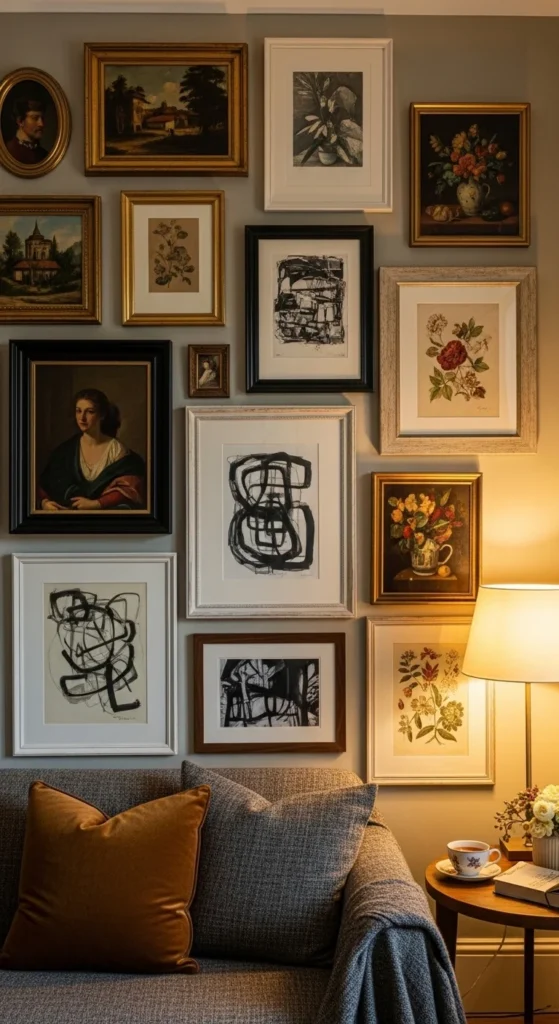
Saloon-style gallery walls embrace a dense, eclectic approach that fills the wall with character. By layering frames of various sizes and styles close together, you create a curated chaos that feels intentional. This style works especially well in living rooms or hallways, adding personality and a sense of story. Proper spacing and overlapping elements can make even a small wall feel full and dramatic.
2. Mix & Match Frame Variety
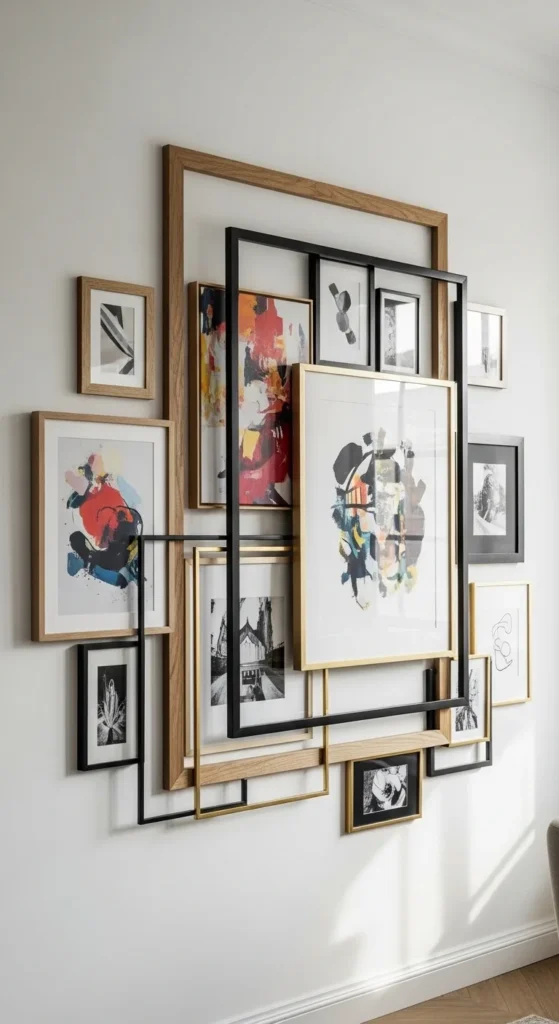
Mixing different frame materials, colors, and sizes brings life to your gallery wall. Wooden, black, and metallic frames combined with oversized pieces create visual depth. This mix-and-match technique allows you to include different art styles, from prints to photographs, without feeling disorganized. It’s an easy way to achieve a professional look without spending a fortune.
3. Mockup-First Planning
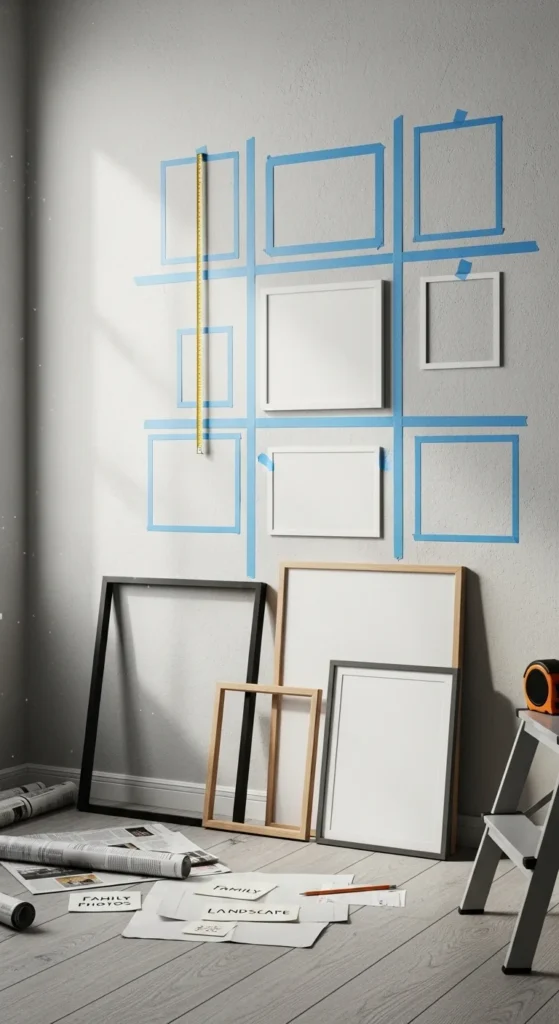
Always start with mockups before hammering in nails. Tape, newspapers, or digital planners help you test spacing and alignment safely. This approach prevents costly mistakes, especially for large or complex walls. It also gives you a chance to rearrange until your layout feels balanced and visually appealing. Planning first ensures a flawless final result.
4. Symmetrical Grid Arrangement
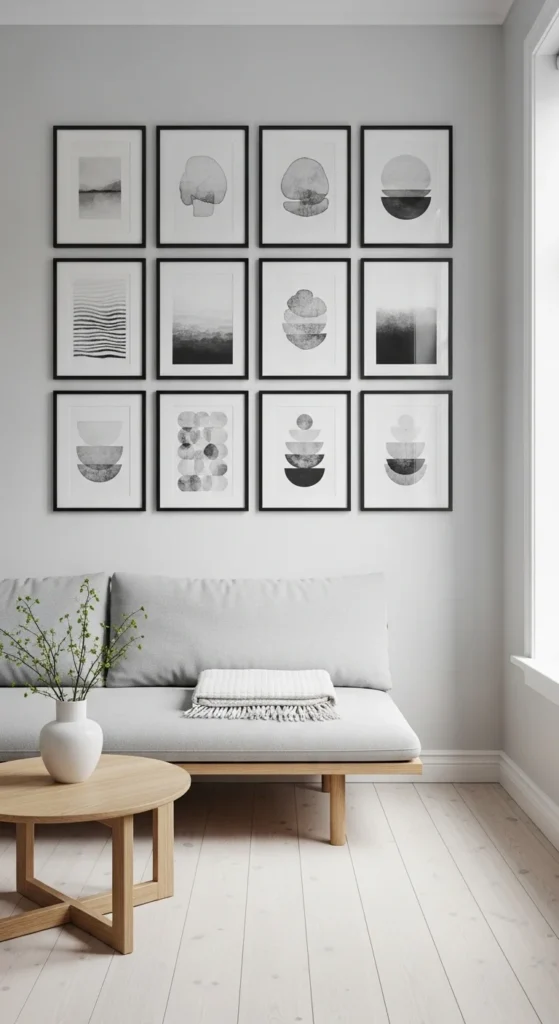
A symmetrical grid creates a clean, modern aesthetic that feels polished and intentional. Matching frame sizes and uniform spacing emphasize order and simplicity. This layout is perfect for minimalists or contemporary homes where clutter is a concern. Even with simple black-and-white prints, a grid layout makes a bold style statement without being overwhelming.
5. Asymmetrical Organic Flow
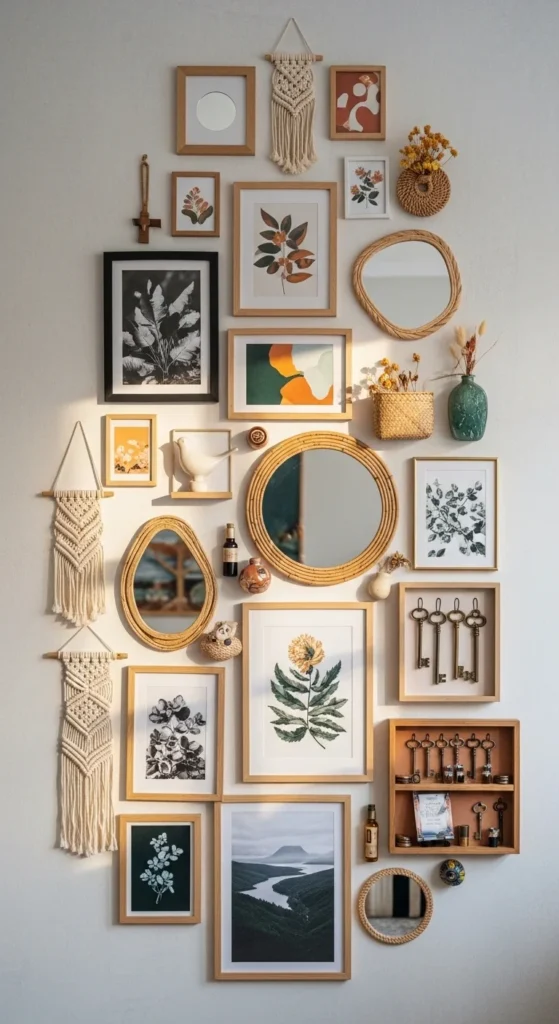
For a more dynamic and casual look, asymmetrical gallery walls are ideal. Arrange pieces organically, mixing vertical and horizontal frames, art prints, and mirrors. The lack of strict alignment adds a sense of movement and creativity. It’s particularly suited for eclectic interiors and helps showcase diverse styles harmoniously.
6. Centerpiece Anchor
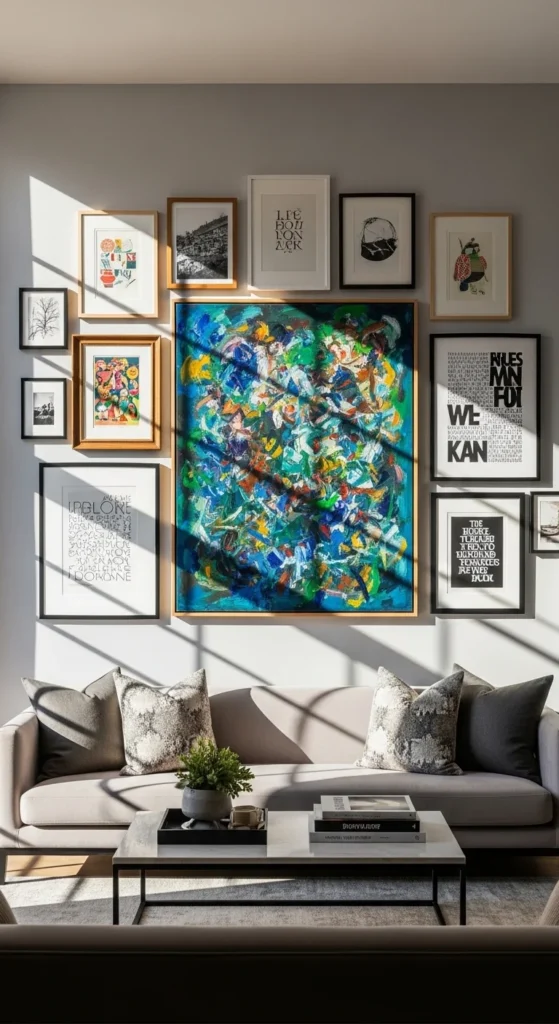
Using a large centerpiece piece as an anchor gives structure to your gallery wall. Smaller frames surrounding the focal point balance the composition and guide the viewer’s eye naturally. This technique works well with oversized prints, statement paintings, or family portraits. It also helps in unifying a variety of smaller frames into a cohesive design.
7. Mixed Media Integration
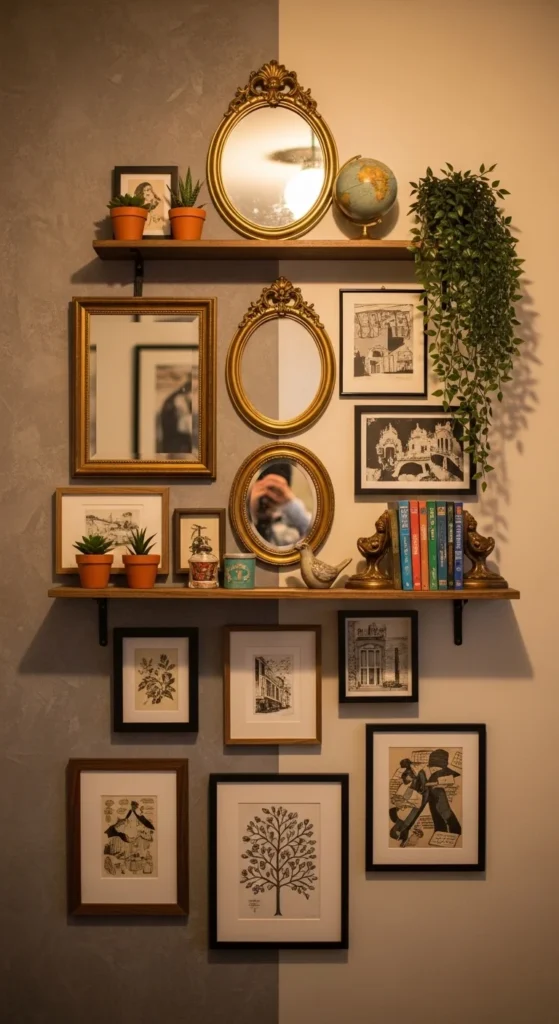
Adding shelves, mirrors, and objects to your wall elevates it beyond traditional frames. Small sculptures, decorative items, or even plants create layers and depth. This mixed media approach enhances visual interest and gives the gallery a more personalized feel. It’s perfect for creating a curated yet approachable display.
8. Lighting Highlights
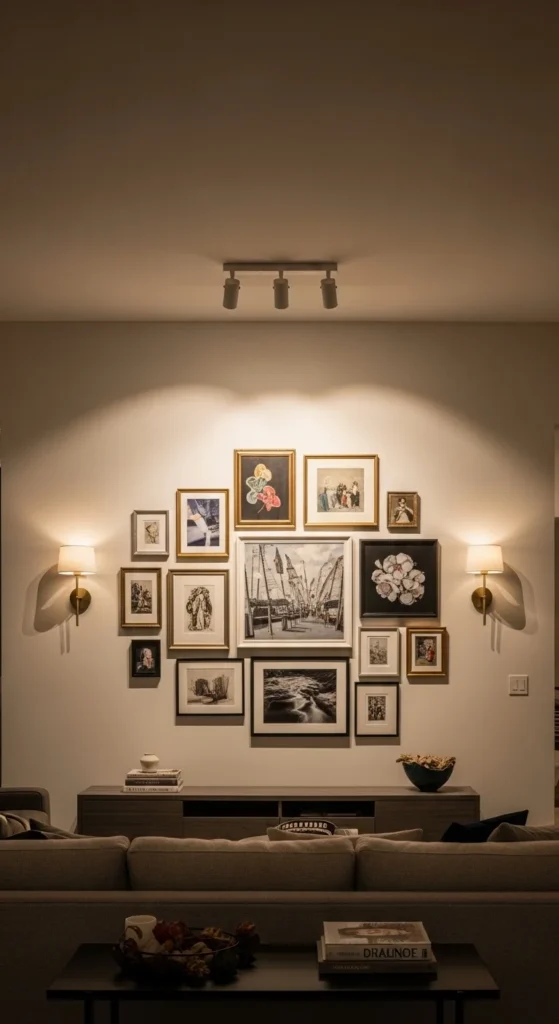
Lighting transforms a gallery wall from ordinary to extraordinary. Install wall-mounted lights, spotlights, or sconces to highlight focal pieces. Good lighting adds dimension, enhances colors, and creates cozy ambiance. Adjustable lighting also allows you to emphasize specific sections for different moods or occasions.
9. Color Cohesion
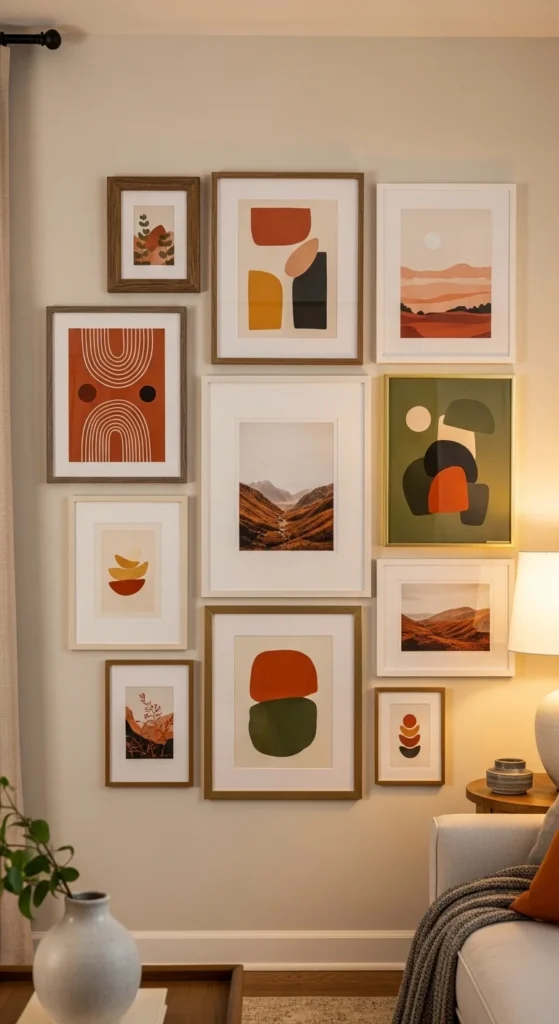
Ensure harmony by coordinating colors across mats, frames, or artworks. Even with eclectic content, a consistent color palette ties everything together. Neutral tones, soft pastels, or matching metallics can make a busy gallery feel cohesive. This approach prevents the wall from appearing cluttered while maintaining visual excitement.
10. Damage-Free Hanging
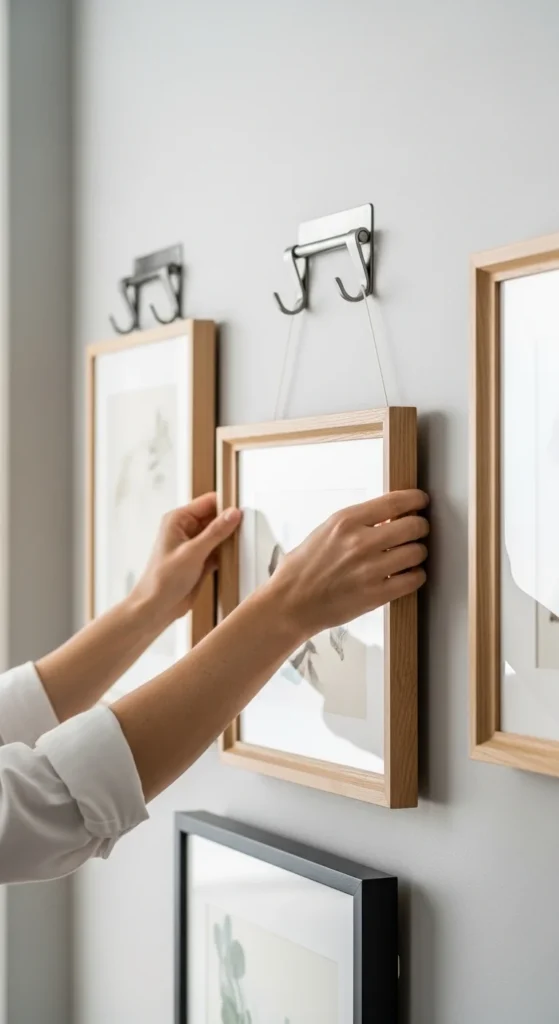
Monkey hooks are essential for renter-friendly installations. They allow you to hang frames safely without leaving holes in the wall. These hooks make swapping and repositioning frames fast and easy. They’re perfect for those who like to update their gallery frequently without committing permanently.
11. Themed Narratives
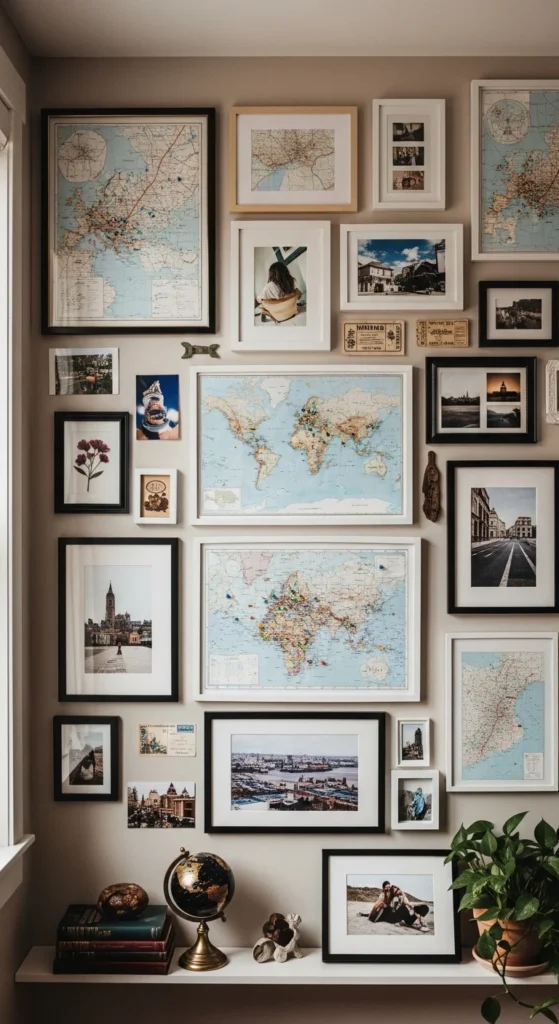
Creating a themed gallery helps unify the collection. Travel memories, family portraits, or abstract art can tell a story across the wall. Themes add personality and cohesion, guiding viewers through your narrative. They also make the gallery more meaningful and engaging for anyone who visits.
12. Budget Thrifting & DIY Finishes
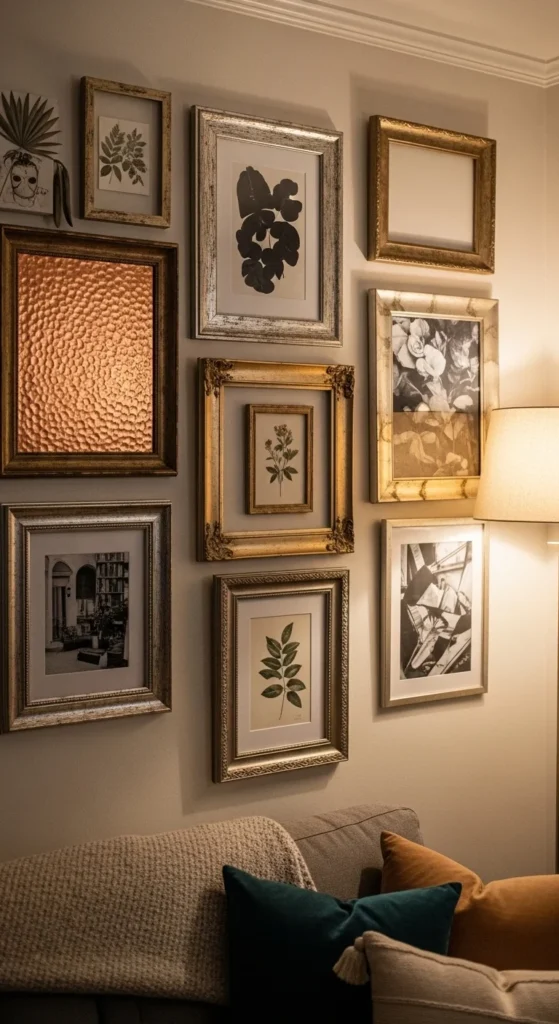
Achieve a high-end look on a budget with thrifted frames and DIY finishes. Metallic paints, Rub n Buff, or repurposed frames give cheap pieces a luxe upgrade. Combining thrifty finds with a few polished pieces creates a professional style without overspending. It’s both eco-friendly and stylish.
13. Staircase Gallery Wall
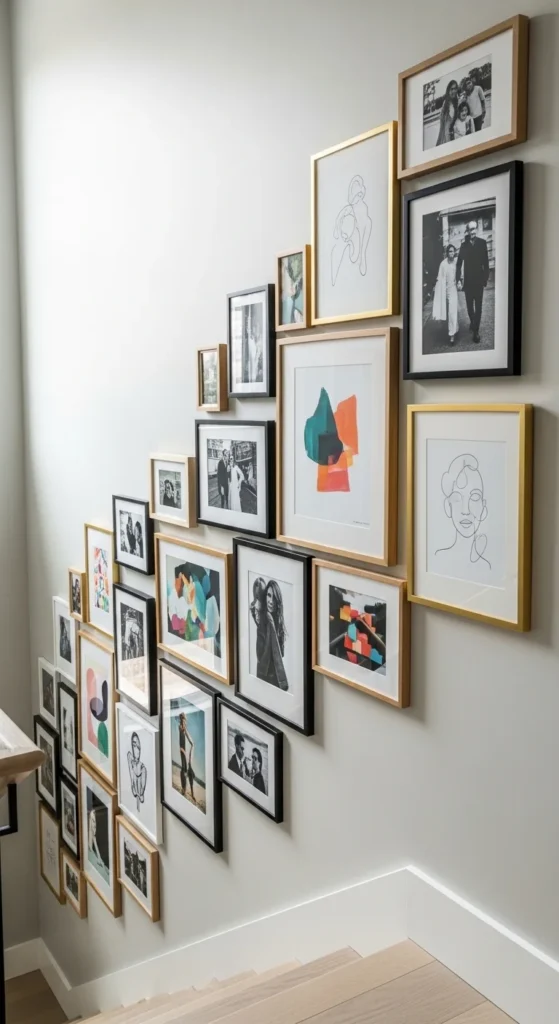
Staircases offer a unique canvas for a gallery wall. Follow the rise and run to create dynamic movement. Use smaller frames toward the bottom and larger pieces toward the top for balance. This approach draws the eye upward and makes transitional spaces visually exciting and interactive.
14. Floating Shelf Base
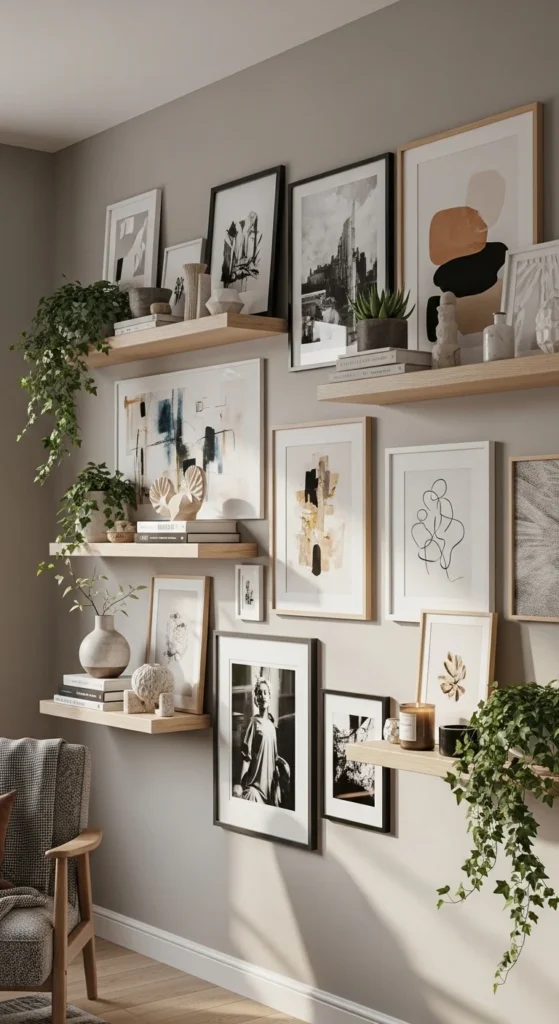
Floating shelves allow maximum flexibility for your gallery wall. You can layer frames, art, and decorative objects without committing to nail placements. Swap pieces seasonally or rearrange layouts for a fresh look. Shelves also add depth and dimension, making the wall feel dynamic rather than flat.
15. Rub n Buff Metallic Finish
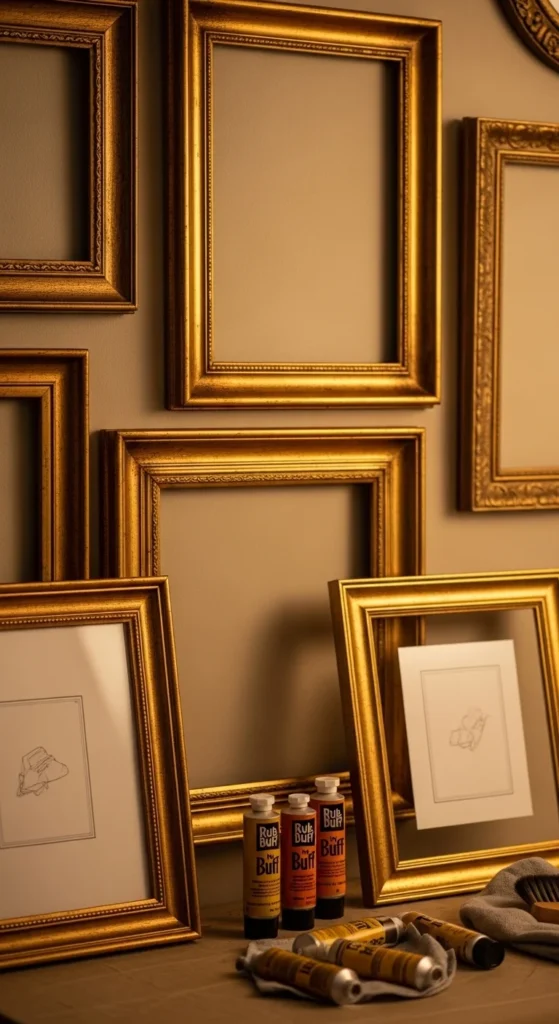
Turn ordinary thrifted frames into luxurious accents with Rub n Buff. This metallic finish gives frames a professional, antique look without spending a fortune. Combine these upgraded pieces with other frames for an eclectic, polished wall. It’s a simple DIY trick that adds glamour instantly.
16. Digital Layout Planning
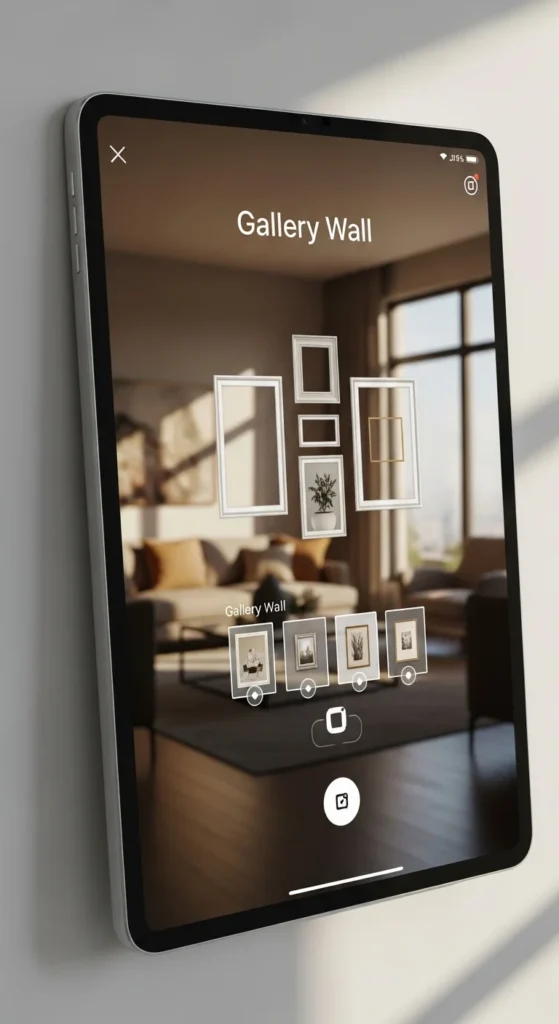
Use digital tools to plan your gallery wall before hanging anything. Apps allow you to simulate different arrangements, frame sizes, and spacing. This reduces trial-and-error and ensures a balanced final display. Digital mockups are especially helpful for complex or large walls, saving time and effort.
17. Boho Eclectic Mix
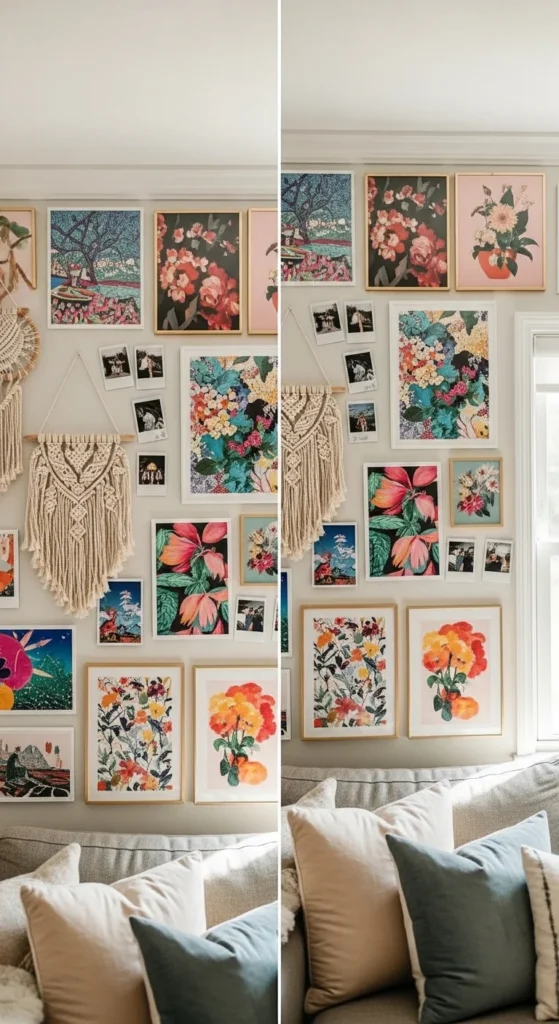
Boho-style walls embrace free-spirited creativity. Mix macrame hangings, polaroids, and art prints for a textured, layered look. This style celebrates eclecticism and personal flair. It works perfectly in casual or cozy spaces, creating a relaxed, artistic atmosphere.
18. Minimalist Grid
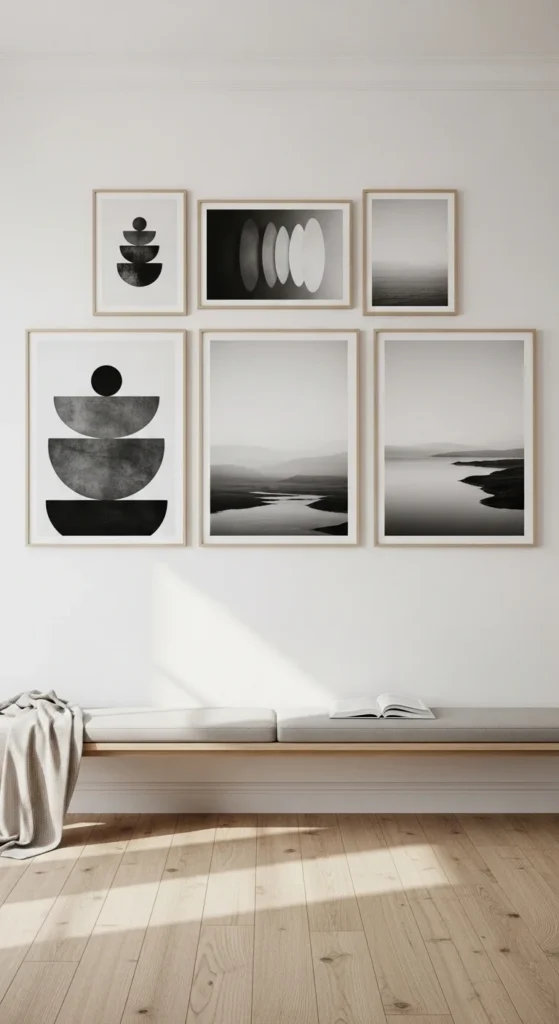
Minimalism thrives on simplicity. Using a few carefully chosen pieces in a grid pattern creates a bold, impactful statement. This approach reduces visual clutter while emphasizing each artwork. Ideal for modern spaces, minimal grids make every piece feel intentional.
19. Outdoor Gallery Walls
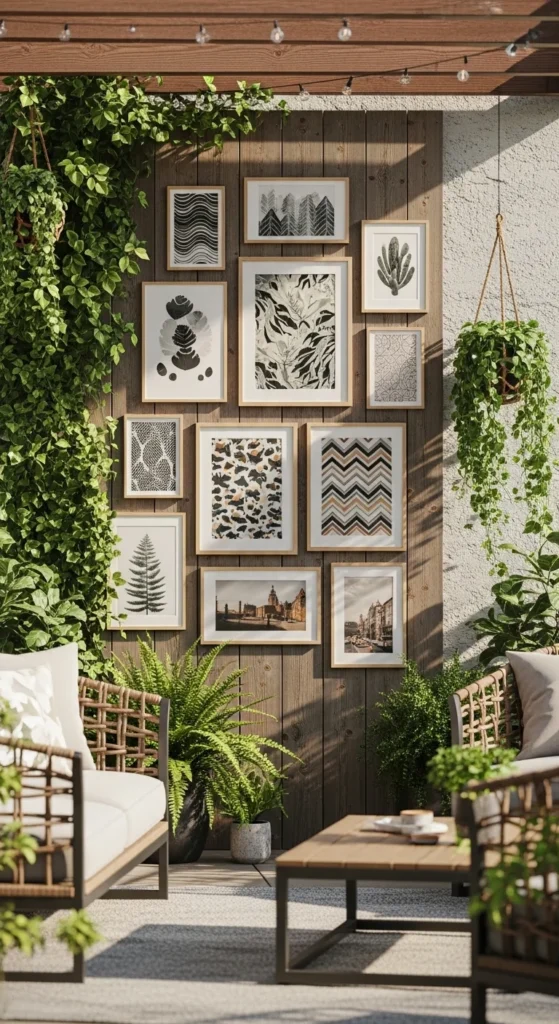
Extend your gallery outdoors for a unique twist. Weatherproof frames and prints let you decorate patios or covered terraces. Outdoor gallery walls add personality to transitional spaces. With proper materials, your art can withstand elements while still feeling curated and stylish.
20. LED Backlit Shadowboxes
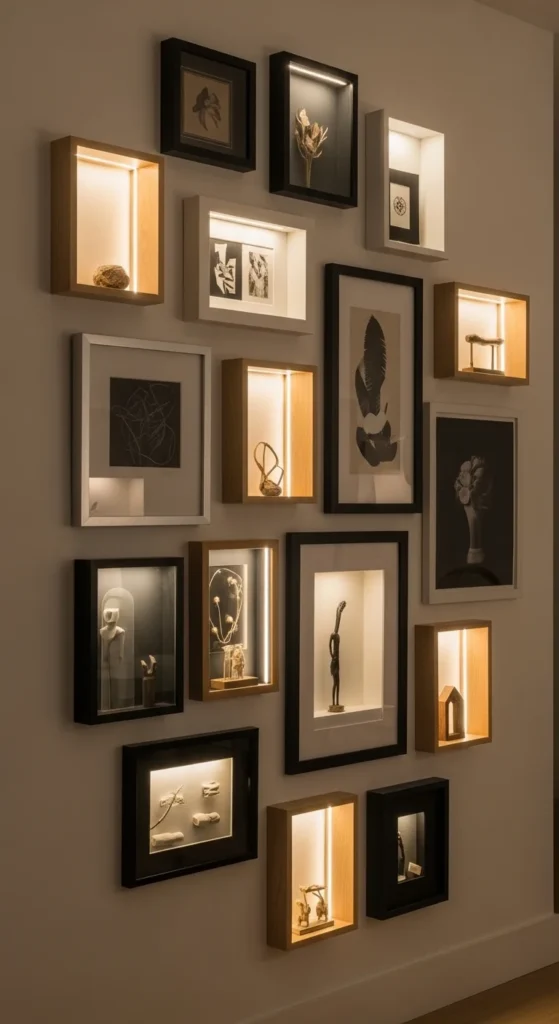
Add drama using LED backlighting behind shadowbox frames. This technique emphasizes depth and creates a glowing focal point. Ideal for modern or evening-centric spaces, LEDs bring galleries to life. It’s a futuristic touch that instantly upgrades a traditional display.
21. Stair Runner Dynamics
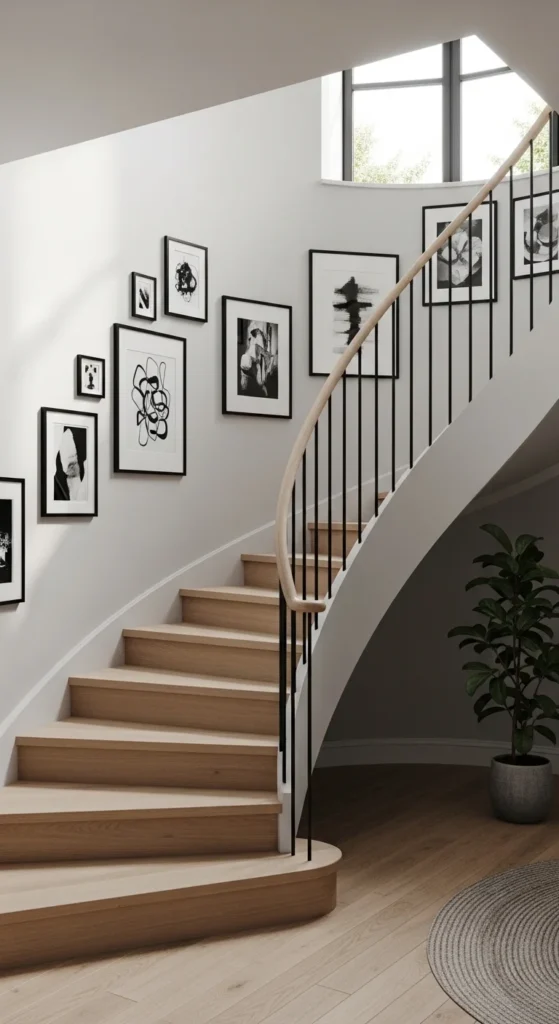
Following the staircase angle, dynamic placement guides the eye upward. Combine different frame sizes and types to create rhythm and interest. The stair runner technique turns ordinary hallways into gallery-worthy passages. It’s an interactive and elegant design strategy.
22. Centerpiece-Focused Layout
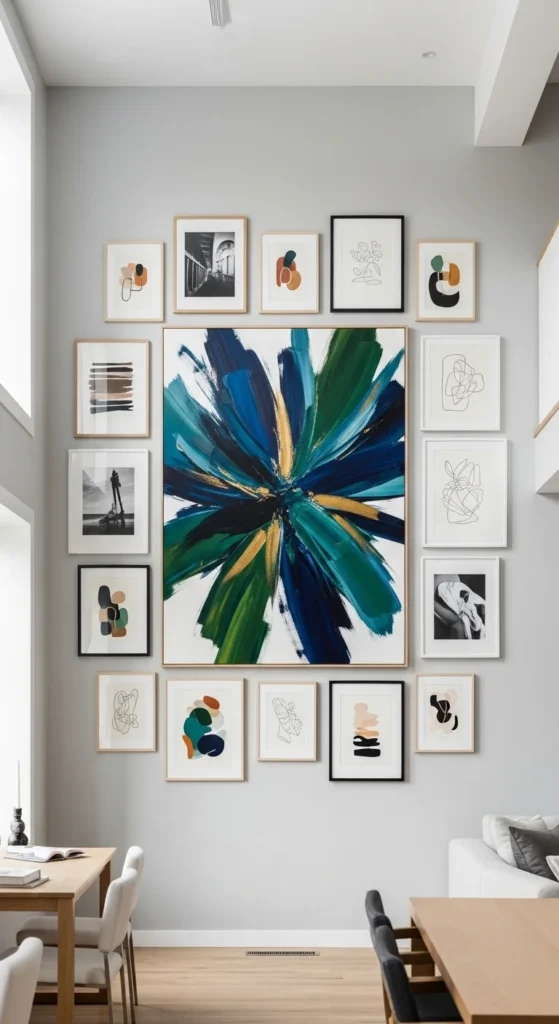
Highlight a single statement piece to anchor your gallery. Surrounding frames complement without competing, providing balance and focus. This layout works well for oversized artwork, paintings, or memorable family portraits. The centerpiece approach makes the wall feel intentional and curated.
23. Mixed Media Layers
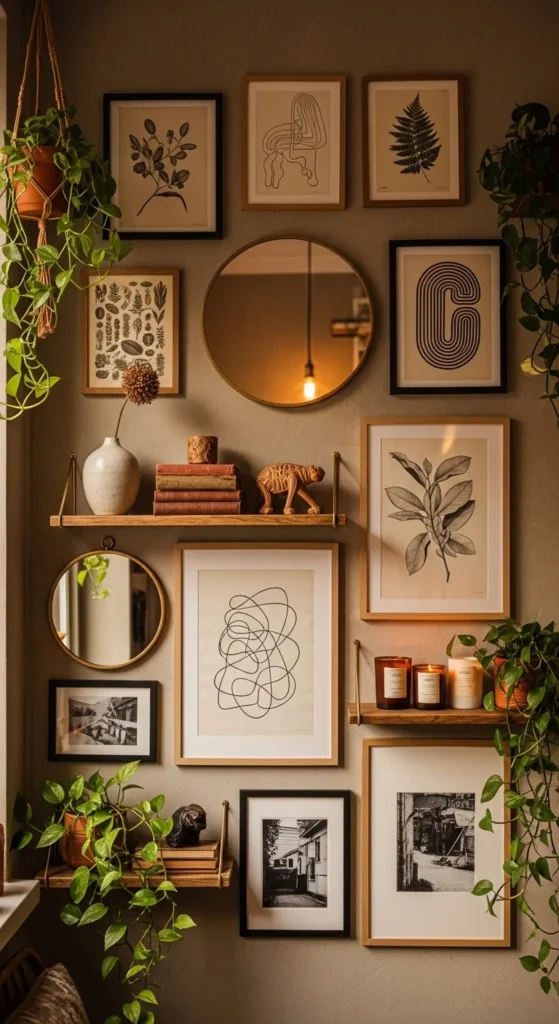
Layering frames, shelves, and objects creates multidimensional interest. Mixed media allows for more creative freedom and personal touches. Small objects or decor pieces break the monotony of frames and add character. This approach suits living rooms, studios, or feature walls.
24. Thematic Storytelling
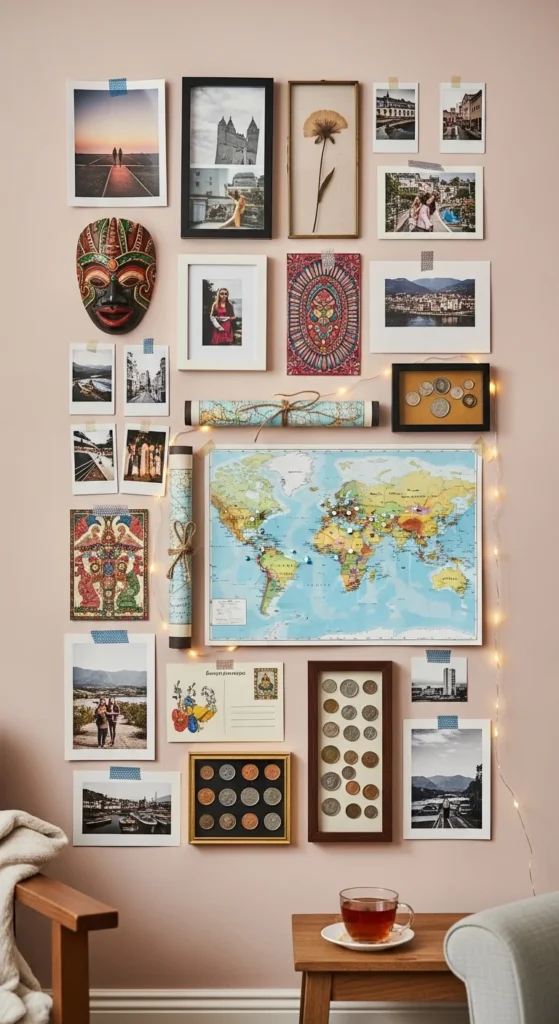
Tell a story through your gallery wall. Whether travel, family, or hobbies, a theme brings cohesion. Visitors can experience a visual narrative as they explore the wall. Themed storytelling elevates a simple collection into a meaningful display.
25. Budget-Friendly Style
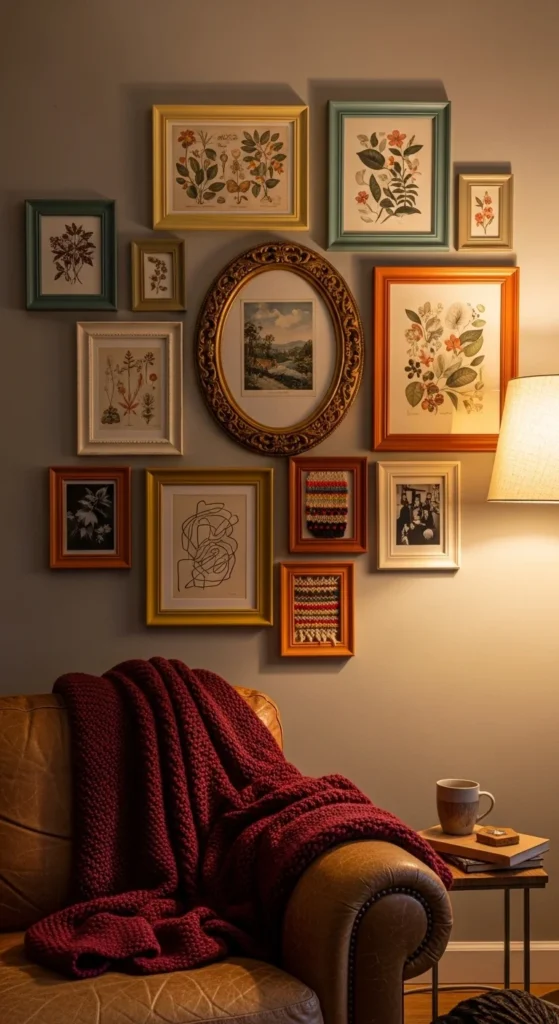
Create a pro-level gallery without splurging. Mix inexpensive frames with DIY finishes like metallic paints. This approach lets you craft an eclectic yet polished wall on a budget. Affordable pieces combined creatively deliver a high-end look.
26. App-Based Mockup Testing
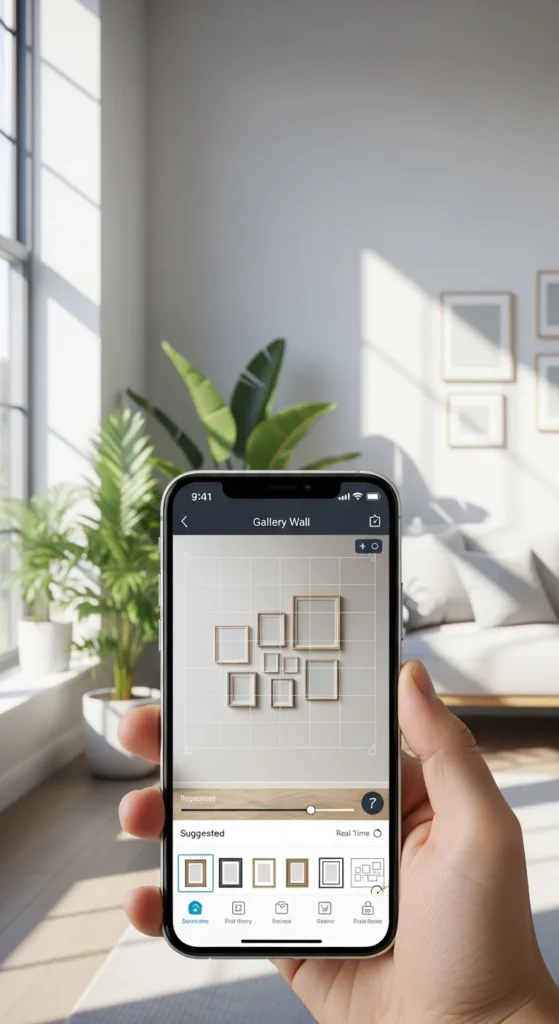
Apps let you experiment digitally before committing to nails. Test layouts, spacing, and color combinations easily. This ensures a flawless installation and reduces stress. Digital planning is ideal for busy DIYers seeking perfection.
27. Pro-Styled Final Touch
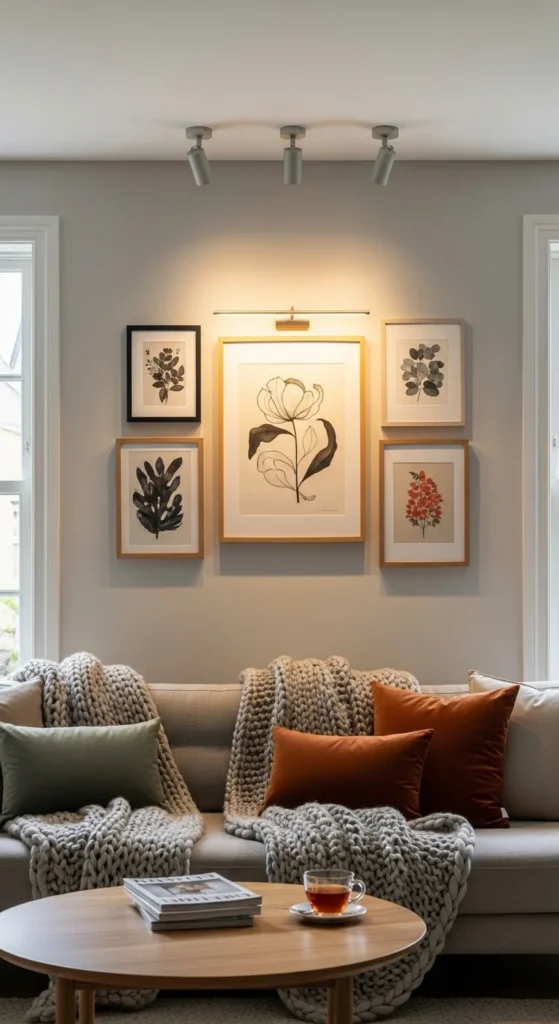
Combine all techniques for a jaw-dropping, professional result. Mix frame types, balance grids and asymmetry, add lighting, and layer objects. Pay attention to color cohesion and centerpiece placement. With careful planning and creativity, your gallery wall becomes a statement piece that elevates any room.
Conclusion
DIY gallery walls are no longer intimidating. By combining mockups, frame variety, lighting, mixed media, and thematic storytelling, you can achieve professional results. Whether maximalist, minimalist, or boho, these 27 ideas cover every style. Start planning, mix and match, and watch your wall transform into a stunning visual centerpiece.