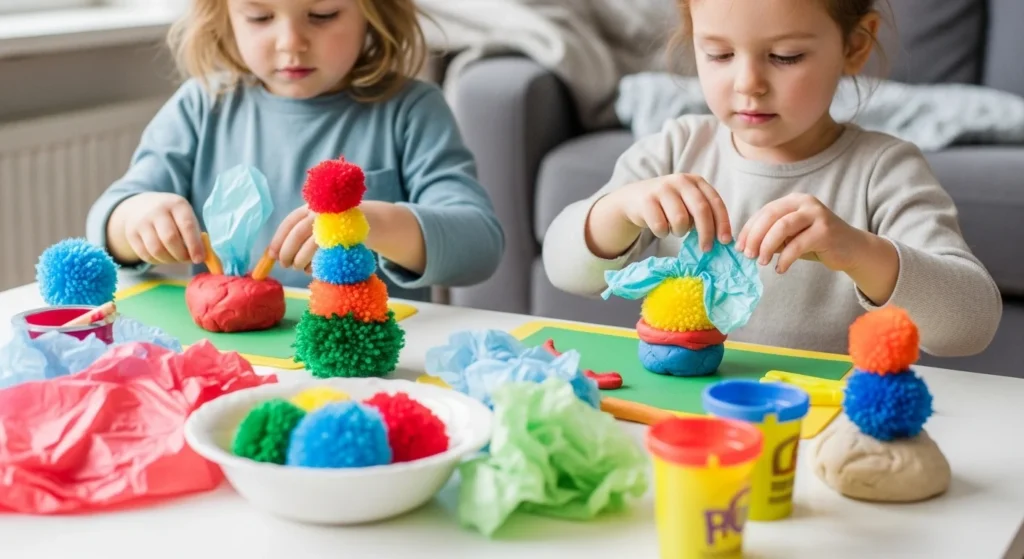
Crafting with toddlers doesn’t have to be messy or complicated. The best toddler crafts use household items, focus on sensory exploration, and encourage fine motor skill development. This guide gives you easy, low-prep, mess-free craft ideas that your little ones will love, complete with step-by-step instructions and image prompts for inspiration.
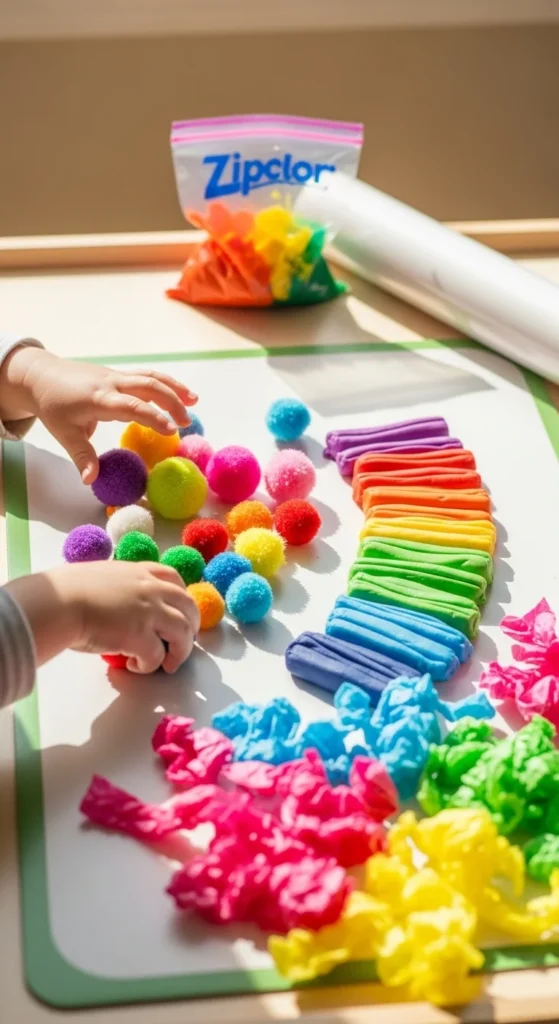
1. Contact Paper Sticky Art
Why It Works: Toddlers can explore textures and colors without glue or mess. Perfect for teaching shapes and coordination.
How to Do It:
- Cut contact paper into sheets and stick them sticky-side up on a table or tray.
- Provide tissue paper pieces, pom poms, or small shapes.
- Let toddlers tear, stick, and rearrange as they like.
- Display their creations on windows for a bright, colorful effect.
Tips: Use pre-cut shapes to save time and encourage pattern recognition.
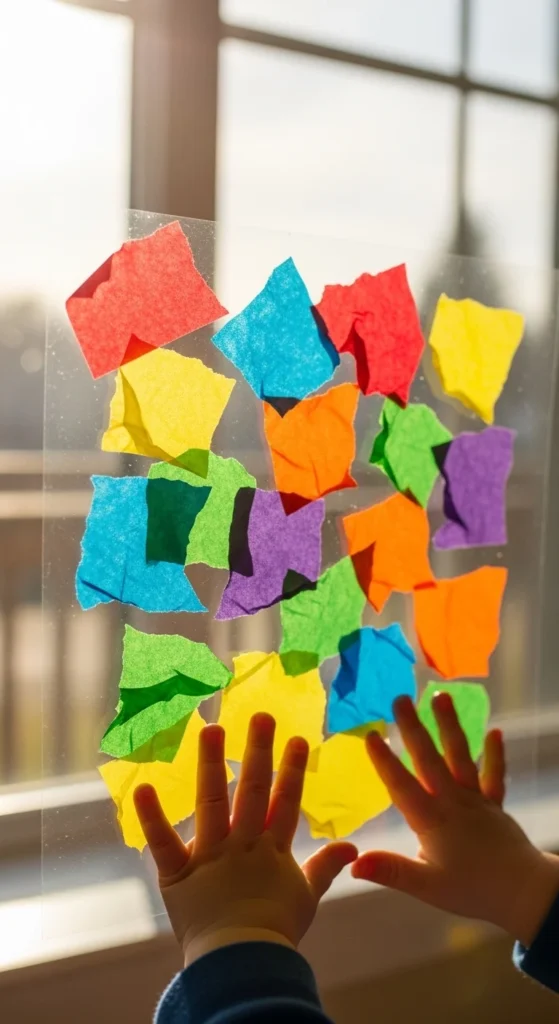
2. Smush Paint in Ziplock Bags
Why It Works: Sensory-rich, mess-free color mixing. Great for teaching colors without cleanup.
How to Do It:
- Squirt two or three colors of washable paint into a large ziplock bag.
- Seal it tightly.
- Let your toddler squish, spread, and mix the colors with their fingers.
- Optional: Tape bag to a table or window for stability.
Tips: Encourage your toddler to describe the colors as they mix.
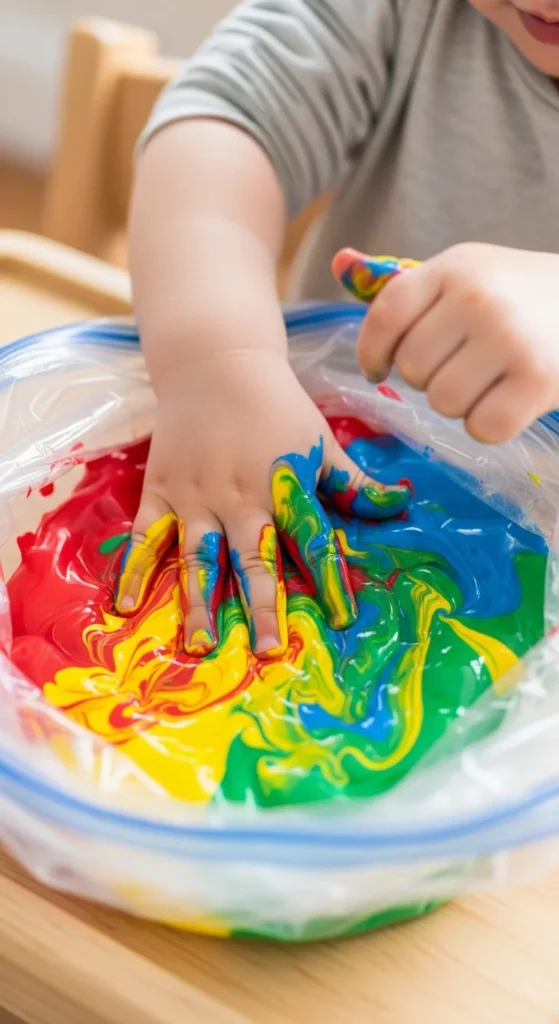
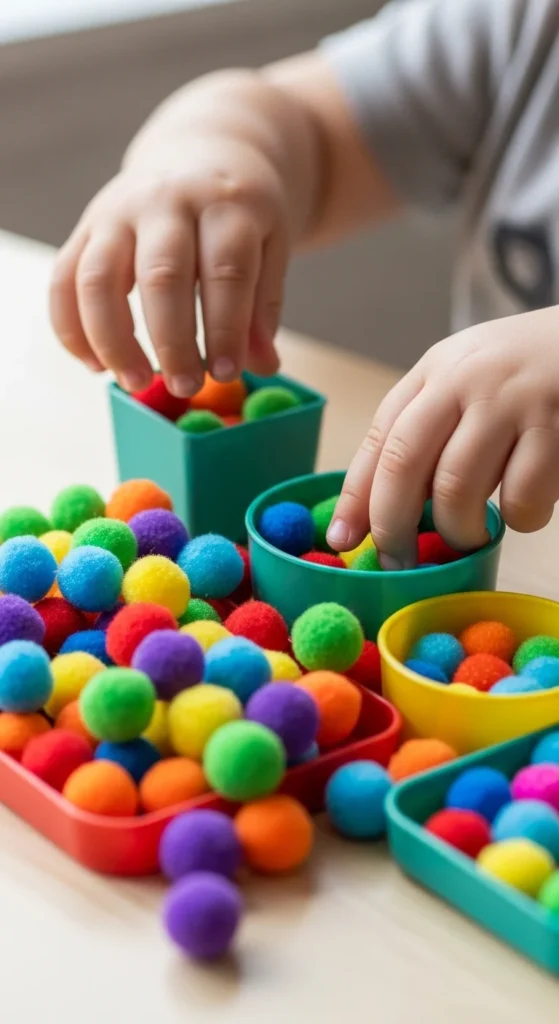
3. Pom Pom Push & Sort
Why It Works: Boosts fine motor skills and hand-eye coordination.
How to Do It:
- Provide small containers, tongs, or spoons.
- Offer pom poms of different colors and sizes.
- Let toddlers push, sort, or transfer pom poms between containers.
- Add a timer for a playful challenge.
Tips: Use different-sized spoons for skill variation.
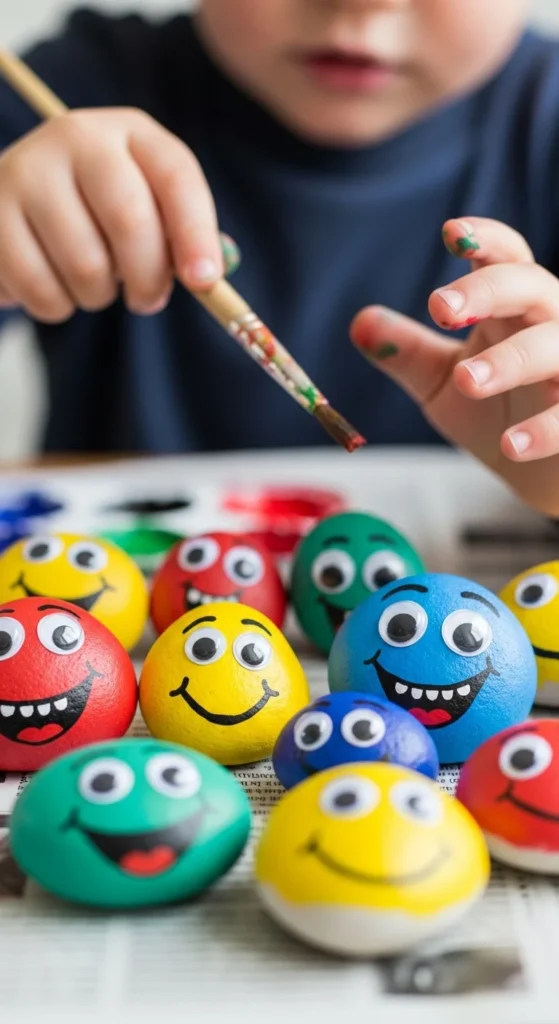
4. Painted Rock Googly Eyes
Why It Works: Creates adorable characters, teaches creativity, and improves grip.
How to Do It:
- Collect smooth rocks.
- Let your toddler paint a base color with washable paint.
- Add googly eyes (or drawn eyes for safety).
- Make a collection of rock pets for play or decoration.
Tips: Use non-toxic paint and supervise small parts for toddlers under 3.
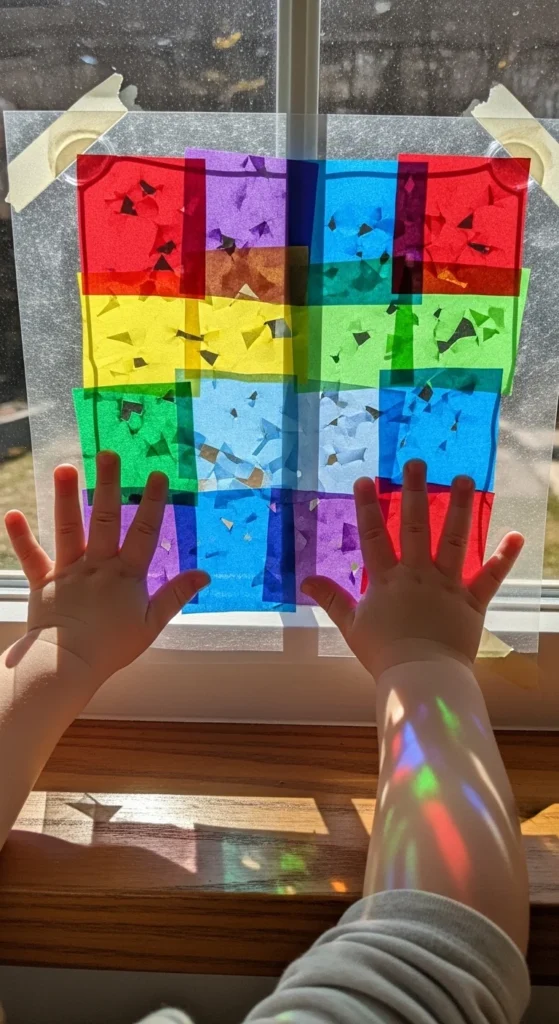
5. Tissue Paper Suncatchers
Why It Works: Beautiful light play, teaches colors, and is easy to assemble.
How to Do It:
- Cut tissue paper into small squares or shapes.
- Stick them onto contact paper sheets.
- Cover with another sheet and trim edges.
- Hang in windows for rainbow light effects.
Tips: Try seasonal shapes like leaves or flowers for themed decorations.
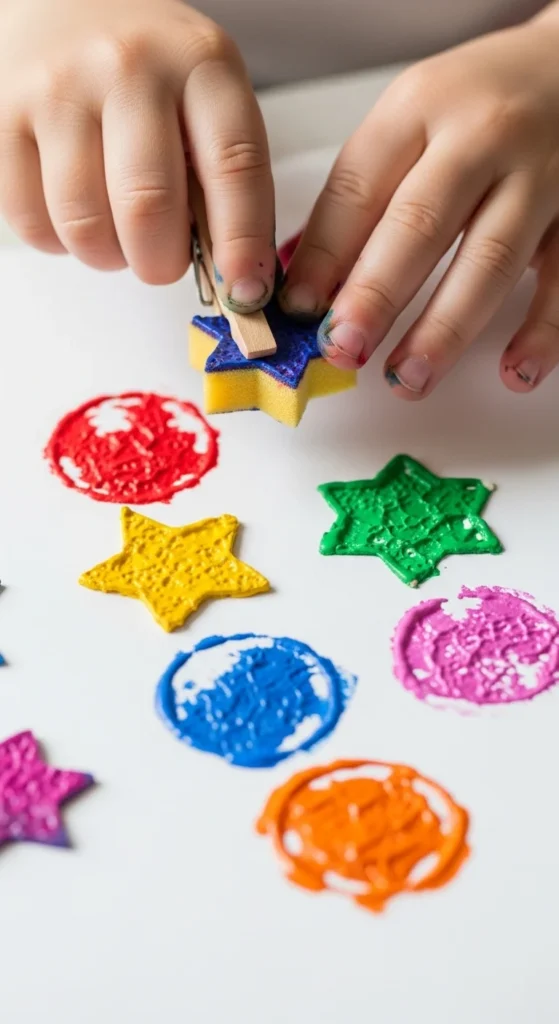
6. Sponge Stamp Painting
Why It Works: Introduces textures and patterns while strengthening grip.
How to Do It:
- Attach small sponges to clothespins or blocks.
- Dip in washable paint.
- Stamp shapes onto paper to make textured patterns.
- Experiment with layering colors.
Tips: Use shapes like stars or hearts to make it more fun.
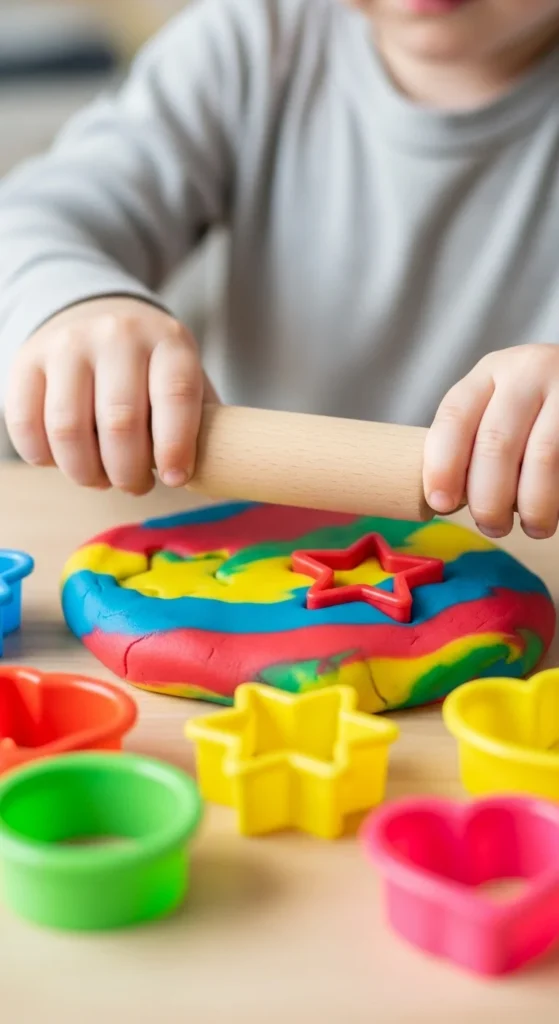
7. Playdough with Tools
Why It Works: Open-ended sensory play with fine motor development.
How to Do It:
- Provide soft playdough and toddler-safe tools (rolling pins, cookie cutters, plastic knives).
- Encourage rolling, cutting, and molding shapes.
- Add small toys or pasta for themed creations.
Tips: Keep a rotating set of loose parts to spark imagination.
8. Handprint Animals
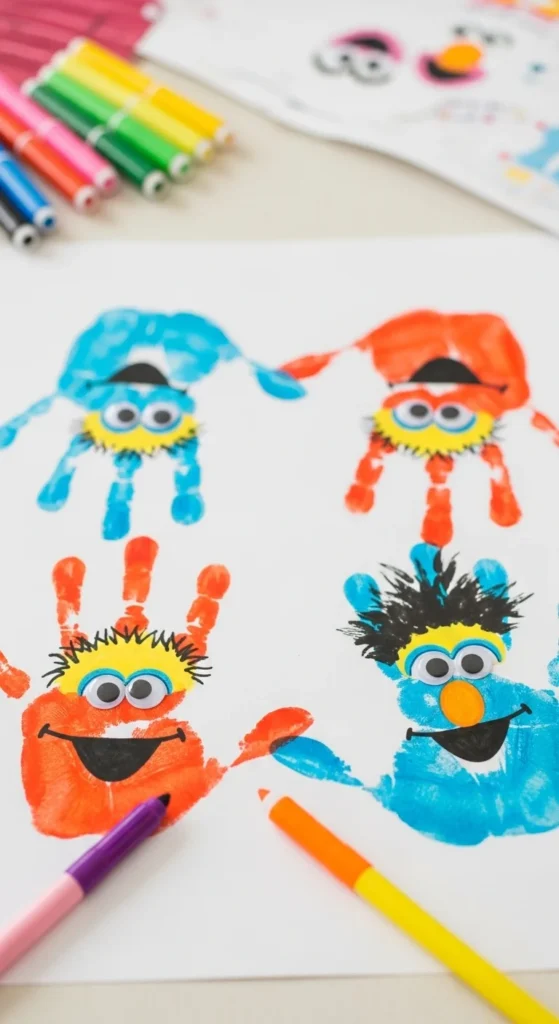
Why It Works: Combines favorite characters with personal art.
How to Do It:
- Trace or paint toddler hands on paper.
- Transform prints into characters like Elmo or Cookie Monster using cutouts or markers.
- Add googly eyes or drawn features.
Tips: Laminate for keepsakes or fridge display.
9. Bubble Wrap Roller Painting
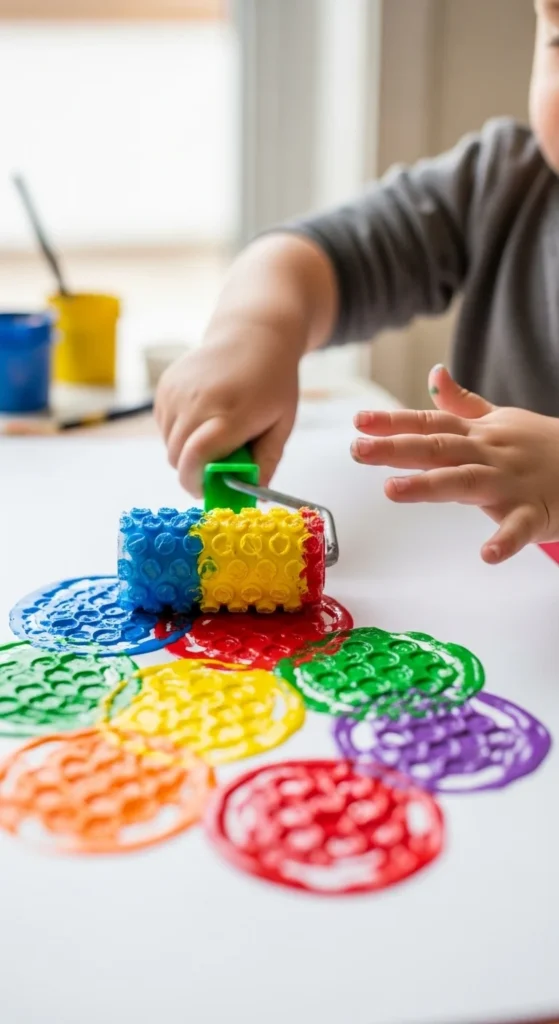
Why It Works: Engaging pop textures with creative color mixing.
How to Do It:
- Wrap bubble wrap around a rolling pin.
- Dip in washable paint.
- Roll over paper to create unique patterns and textures.
- Explore layered colors for extra sensory effect.
Tips: Use multiple bubble wrap sizes for varied textures.
10. Tape Resist Art
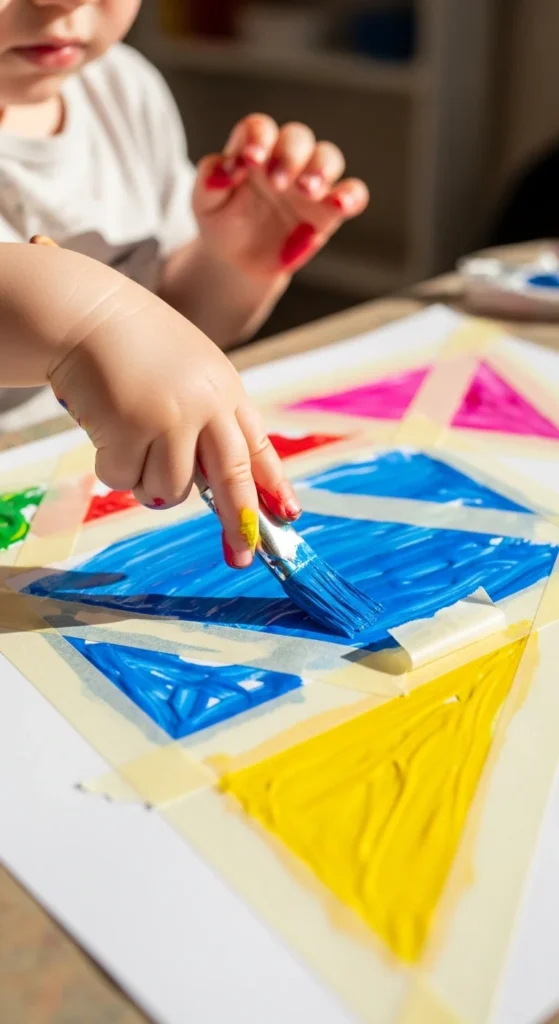
Why It Works: Introduces patterns and surprises; encourages problem-solving.
How to Do It:
- Apply painter’s tape to paper in stripes, shapes, or letters.
- Let toddler paint over it with washable paints.
- Remove tape to reveal clean, vibrant patterns.
Tips: Use seasonal colors or favorite shapes for thematic crafts.
Quick Tips for Toddler Craft Success
- Keep sessions short: 5–15 minutes suits short attention spans.
- Rotate materials: Use household items like pasta, cotton balls, or coffee filters for variety.
- Safety first: Always supervise toddlers with small parts.
- Focus on process: Enjoy exploring textures, colors, and movements, not perfection.
- Display their work: Celebrate creations on walls, windows, or shelves to boost confidence.
Final Thoughts
Toddlers thrive with mess-free, sensory-rich activities that are easy to set up and allow creativity. By using household staples like contact paper, ziplock bags, pom poms, and playdough, parents can provide daily fun that promotes fine motor skills, color recognition, and imaginative play. These crafts are not just activities—they are moments of connection, learning, and joy.